by SAFW-BC | Jun 25, 2026 | Restaurants, Services
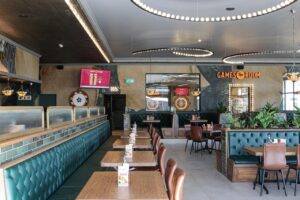
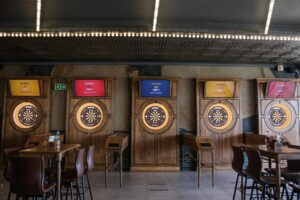
Games, colour, and comfort food. Happy Folks is a fun, feel-good space for all ages – perfect for birthdays, casual hangouts, and team events.
BACKGROUND
Back in 1997, Douw Krugmann started something special — a little fish restaurant at the V&A Waterfront with a simple but powerful idea: fresh ingredients, a great atmosphere, and food that people would actually love. Fast forward to today, and that same passion has grown into a proudly South African collection of brands that we think are pretty hard to beat.
“At West Coast Group, we’re passionate about food, good vibes & cold beers.”
FRANCHISE SUPPORT
At West Coast Group, we are committed to equipping our franchisees and managers with the knowledge, skills, and confidence needed to build and lead exceptional businesses. Our comprehensive 8-week training programme is designed to give new team members a strong foundation across all key areas of business operations — including franchising, finance, stock control, human resources, and marketing.
Beyond the classroom, you’ll gain valuable hands-on experience in both kitchen and front-of-house environments, giving you a well-rounded understanding of daily operations from the ground up. Because we believe that people, service excellence, and strong leadership are at the heart of every successful business, we invest in giving you the right tools, support, and guidance to build a thriving, professionally run operation — whichever of our exciting brands you choose to be a part of.
ONGOING SUPPORT INCLUDES:
- Clear operational standards and guidelines
- Ongoing training and staff development
- Product innovation and sourcing support
- National brand and community marketing initiatives
- Financial guidance and business development tools
- Support with local store marketing efforts
SITE REQUIREMENTS
A suitable suburban location or a high-foot traffic area near both commercial and residential neighbourhoods.
350-500m2 – Approximate inside space
100-200m2 – Approximate outside space
Sufficient parking space

by SAFW-BC | Jun 25, 2026 | Franchises, Restaurants, Services
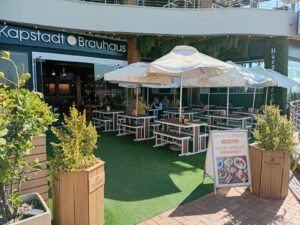
Bavarian food, great beer, and festive vibes. Kapstadt Brauhaus is the ideal spot for live music, sports, and hearty meals in a lively setting.
BACKGROUND
Back in 1997, Douw Krugmann started something special — a little fish restaurant at the V&A Waterfront with a simple but powerful idea: fresh ingredients, a great atmosphere, and food that people would actually love. Fast forward to today, and that same passion has grown into a proudly South African collection of brands that we think are pretty hard to beat.
“At West Coast Group, we’re passionate about food, good vibes & cold beers.”
FRANCHISE SUPPORT
At West Coast Group, we are committed to equipping our franchisees and managers with the knowledge, skills, and confidence needed to build and lead exceptional businesses. Our comprehensive 8-week training programme is designed to give new team members a strong foundation across all key areas of business operations — including franchising, finance, stock control, human resources, and marketing.
Beyond the classroom, you’ll gain valuable hands-on experience in both kitchen and front-of-house environments, giving you a well-rounded understanding of daily operations from the ground up. Because we believe that people, service excellence, and strong leadership are at the heart of every successful business, we invest in giving you the right tools, support, and guidance to build a thriving, professionally run operation — whichever of our exciting brands you choose to be a part of.
ONGOING SUPPORT INCLUDES:
- Clear operational standards and guidelines
- Ongoing training and staff development
- Product innovation and sourcing support
- National brand and community marketing initiatives
- Financial guidance and business development tools
- Support with local store marketing efforts
SITE REQUIREMENTS
A suitable suburban location or a high-foot traffic area near both commercial and residential neighbourhoods.
350-500m2 – Approximate inside space
100-200m2 – Approximate outside space
Sufficient parking space

by SAFW-BC | Jun 25, 2026 | Franchises, Restaurants, Services
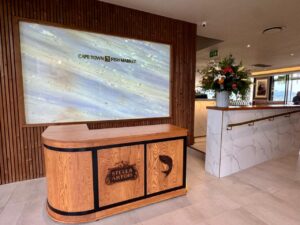
A fusion of South African seafood and Japanese sushi, CTFM is known for fresh flavours, coastal style, and its iconic sushi belt. Now serving customers across Southern and East Africa.
BACKGROUND
Back in 1997, Douw Krugmann started something special — a little fish restaurant at the V&A Waterfront with a simple but powerful idea: fresh ingredients, a great atmosphere, and food that people would actually love. Fast forward to today, and that same passion has grown into a proudly South African collection of brands that we think are pretty hard to beat.
“At West Coast Group, we’re passionate about food, good vibes & cold beers.”
FRANCHISE SUPPORT
At West Coast Group, we are committed to equipping our franchisees and managers with the knowledge, skills, and confidence needed to build and lead exceptional businesses. Our comprehensive 8-week training programme is designed to give new team members a strong foundation across all key areas of business operations — including franchising, finance, stock control, human resources, and marketing.
Beyond the classroom, you’ll gain valuable hands-on experience in both kitchen and front-of-house environments, giving you a well-rounded understanding of daily operations from the ground up. Because we believe that people, service excellence, and strong leadership are at the heart of every successful business, we invest in giving you the right tools, support, and guidance to build a thriving, professionally run operation — whichever of our exciting brands you choose to be a part of.
ONGOING SUPPORT INCLUDES:
- Clear operational standards and guidelines
- Ongoing training and staff development
- Product innovation and sourcing support
- National brand and community marketing initiatives
- Financial guidance and business development tools
- Support with local store marketing efforts
SITE REQUIREMENTS
A suitable suburban location or a high-foot traffic area near both commercial and residential neighbourhoods.
350-500m2 – Approximate inside space
100-200m2 – Approximate outside space
Sufficient parking space
by SAFW-BC | Jun 12, 2026 | Blogs
If you’ve been thinking about starting a business, you’ve probably already hit the same wall most aspiring entrepreneurs do – funding. Getting a bank to back a brand-new idea is notoriously difficult. But what if there was a way to walk into a lender’s office with a business model they already trust, one with a proven track record, established systems, and a name people recognise?
That’s exactly what happens when you buy a franchise. And it’s one of the most overlooked advantages in the conversation about entrepreneurship.
The Funding Problem Every New Business Owner Faces
Lenders are risk-averse by nature. They want to see proof that a business model works before they commit capital to it. An untested concept, however brilliant, carries uncertainty they’re rarely willing to absorb.
This is the core challenge for independent startups. Without a track record, financial forecasts are little more than optimistic guesswork. Banks know this, and their approval rates reflect it.
Franchising fundamentally solves this problem.
Why Banks Favour Franchises Over Startups
When you buy a franchise, you’re not pitching a new idea — you’re investing in a model that has already been built, tested, and refined. The systems are in place. The brand is established. The operational processes have been proven across multiple locations, often over many years.
From a lender’s perspective, that changes everything.
Most major banks in South Africa have dedicated franchise desks staffed by specialists who understand this environment inside and out. These aren’t generalist credit analysts but professionals who speak the language of franchising and can accurately assess the viability of a franchise investment.
This matters because it means that when you apply for funding to buy a franchise, you’re not navigating the process alone. You have access to advisors who can help you structure your deal, assess affordability, and present your application in the strongest possible light.
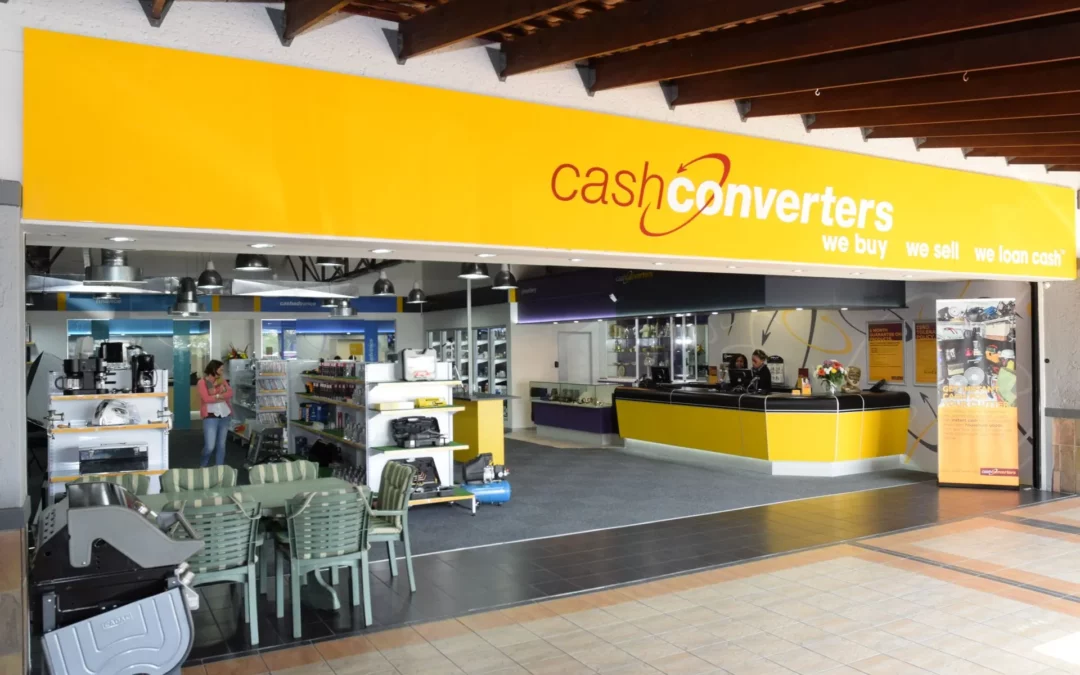
In a recent interview on Smile FM, Engela van Loggerenberg of Cash Converters Southern Africa clearly unpacked this dynamic: franchising is regarded as one of the most bankable routes into business ownership, precisely because it replaces uncertainty with structure.
What “Bankable” Actually Means — And Why It Matters to You
The word “bankable” gets thrown around in business circles, but what does it actually mean in practice?
A bankable business is one that a financial institution is confident enough in to lend against. That confidence is built on three things: predictability, precedent, and performance data.
Franchises offer all three.
When you buy a franchise, lenders can look at the performance of comparable stores in the network to build a realistic picture of what your business is likely to achieve. They can evaluate the franchisor’s track record. They can assess the brand’s strength and the demand for your product or service in your target market.
Compare this to a startup, where every one of those data points is either an estimate or simply absent. The risk profile is incomparably higher — and so is the likelihood of rejection or punishing interest rates.
Choosing to buy a franchise instead of starting from scratch isn’t just a lifestyle choice. It’s a strategic financial decision that materially improves your access to capital.
Understanding the Investment: What You’re Actually Buying
Let’s get specific, because one of the biggest mistakes prospective franchisees make is underestimating what their investment actually covers, and why that structure matters to lenders.
At Cash Converters Southern Africa, a turnkey franchised business in 2026 is priced at approximately R4.5 million. The term “turnkey” is key here. It means the business is fully set up and ready to operate from day one, including shopfitting, equipment, fixtures, fittings, systems, and infrastructure. You’re not buying a concept; you’re buying a functioning business.
Investment in a franchise typically divides into two broad categories:
Setup costs cover the physical and operational elements required to open the doors. This includes shopfitting, equipment, technology infrastructure, and initial stock where applicable.
Working capital supports the business through its early trading period — covering day-to-day expenses while revenue builds. First-time franchise buyers often underestimate this component, and getting it wrong can create cash flow pressure at exactly the wrong moment.
Understanding this split isn’t just useful for your own planning; it’s essential for a credible funding application. Banks want to see that you understand where the money is going and that your projections are grounded in reality.
The 50/50 Rule: A Funding Structure Built for Long-Term Success
Cash Converters Southern Africa encourages prospective franchisees to approach funding with a 50/50 structure in mind. Ideally, at least half of the total investment — approximately R2.25 million for a standard Cash Converters store — should be available as unencumbered capital. The remaining balance can then be financed through a bank or other financial institution.
This isn’t an arbitrary guideline. It’s a structure designed to serve you.
Walking into a funding conversation with meaningful equity in your deal signals to lenders that you have genuine skin in the game. It reduces the debt burden on the business during its critical early stages. It gives you a buffer against unexpected costs or slower-than-anticipated revenue growth. And it significantly strengthens your application, improving both the likelihood of approval and the terms you’re likely to receive.
Franchisees who rely too heavily on borrowed capital from the outset put themselves under enormous pressure. Every month, before the business generates a Rand of profit for you, it’s servicing debt. That margin for error disappears fast if trading conditions aren’t immediately ideal.
The 50/50 approach isn’t about gatekeeping — it’s about setting you up for genuine, sustainable success.
Franchising as a Pathway, Not Just a Purchase
It’s worth stepping back and appreciating what the franchise model represents for first-time business owners.
Entrepreneurship is often portrayed as a solo endeavour — the lone founder building something from nothing through sheer grit. That narrative is compelling, but it glosses over the brutal reality of startup failure rates. Most new independent businesses don’t survive their first five years.
Franchising offers a different pathway. When you buy a franchise, you’re joining a system built by people who have already made the costly mistakes and worked out the answers. You benefit from their learning curve without paying for it yourself. You get access to training, support structures, marketing infrastructure, and the collective buying power of a national network.
And critically, you get access to funding on terms that an independent startup cannot match.
That combination of reduced risk, structured support, and improved fundability is why franchising continues to grow as a business model even in challenging economic climates. It’s not the easiest path, but it may well be the smartest one.
Is Buying a Franchise Right for You?
If you’re seriously considering business ownership, the question isn’t really whether to buy a franchise versus going it alone. The more useful question is: which franchise, in which sector, with which support structure, aligns with your goals, your capital, and your appetite for the work involved?
For those drawn to a high-traffic retail model with a well-established brand, proven demand, and a 30-year track record across Southern Africa, Cash Converters represents a compelling option worth exploring in depth.
The funding pathway is clear. The model is bankable. The support is real.
Find out more about buying a Cash Converters franchise and take the first step toward owning a business that banks believe in.

by SAFW-BC | Jun 5, 2026 | Blogs
So, the career you spent decades building has come to an end — whether by choice or circumstance. Retirement arrived, or a retrenchment letter did. Either way, you’re standing at a crossroads that millions of people face every year: What do I do now?
If you’re energetic, experienced, and not quite ready to spend your days on the golf course, franchising might be the most compelling answer you haven’t seriously considered yet. It blends the excitement of running your own business with the security of a tried-and-tested system — and it’s increasingly becoming the go-to venture for people in exactly your position.
Why Franchising Makes Sense at This Stage of Life
Here’s what most people don’t realise: the qualities that made you successful in your career — discipline, people skills, financial literacy, and the ability to follow a process — are precisely the qualities that make a great franchisee.
You’re not starting from zero. You’re starting from experience.
Unlike launching a business from scratch, a franchise gives you a brand that’s already trusted, a product or service that’s already been market-tested, and a support structure that holds your hand through every stage of setup and operation. The hard work of figuring out what to sell and how to sell it has already been done. Your job is to execute with excellence — and that’s where your years of professional life become a genuine competitive advantage.
The Benefits of Franchising Post-Career
1. A Proven Business Model
The biggest risk in starting a new business is the unknown. With a franchise, that unknown shrinks dramatically. You’re buying into a system with a track record, established suppliers, operations manuals, marketing templates, and ongoing head-office support. The failure rate for franchised businesses is significantly lower than for independent startups — a reassuring fact when you’re investing your retirement savings or retrenchment package.
2. Immediate Brand Recognition
Building a brand from scratch can take years and cost a fortune. A franchise gives you instant credibility with customers who already know and trust the name above your door. This translates into faster customer acquisition and quicker revenue generation from day one.
3. Training and Ongoing Support
You don’t need to know the industry inside out before you start. Reputable franchisors provide comprehensive training — often covering operations, sales, staff management, and technology — before you open your doors. And the support doesn’t stop there. Most franchises offer continuous coaching, regional meetings, updated marketing materials, and access to a community of fellow franchisees who understand exactly what you’re going through.
4. Flexibility to Match Your Lifestyle
Many franchise models are designed with lifestyle in mind. From home-based operations and mobile service franchises to part-time concepts and semi-passive management models, there is a franchise to suit virtually every lifestyle preference. You can choose the level of involvement that works for you — whether that’s hands-on daily operations or a management-style role where you oversee a small team.
5. A Sense of Purpose and Community
One of the most underestimated challenges of retirement or retrenchment is the loss of identity and routine. Franchising restores both. It gives you something meaningful to build, a team to lead, customers to serve, and goals to work toward. Many franchisees report that the social dimension of running a business — the daily interaction with people — is just as rewarding as the financial returns.
Is Franchising Right for Your Lifestyle?
This is the question worth sitting with honestly. Franchising is not passive income. It requires real commitment, especially in the early months. But for the right person, it’s deeply fulfilling.
You might be a strong candidate if you:
- Enjoy working with people and building relationships
- Are comfortable following systems and processes (rather than reinventing the wheel)
- Want structured flexibility — income with some control over your time
- Have moderate capital to invest and a responsible approach to financial risk
- Are motivated by growth, learning, and a sense of achievement
- Prefer accountability over total independence
You might want to think carefully if you:
- Are seeking a completely hands-off investment
- Have very limited capital and cannot absorb a slow initial trading period
- Prefer total creative freedom with no brand guidelines to follow
- Are risk-averse to the point where any business uncertainty feels untenable
The good news? Franchises span a wide spectrum of investment levels, time commitments, and industries — from food and beverage to education, health and wellness, home services, pet care, and financial services. Finding the right fit is a matter of honest self-reflection and good research.
Frequently Asked Questions About Franchising
How much capital do I need to start a franchise?
Investment levels vary enormously. Entry-level franchises can start at R50,000–R150,000, while mid-tier concepts typically require R300,000–R1,000,000, and premium food or retail franchises can exceed R2,000,000. Your retrenchment package or retirement savings may go further than you think — and many franchisors work with preferred lenders or banks who understand the franchise model and offer tailored financing. As a rule of thumb, most banks require an own contribution (cash invested) of at least 50% of the total capital requirement.
Do I need industry experience?
In most cases, no. Franchisors design their training programmes to bring people with no prior industry background up to speed quickly. What matters more is your attitude, work ethic, and willingness to follow the system. Some franchises do favour applicants with specific backgrounds (e.g., financial services or healthcare), but the majority prioritise character over credentials.
What does the franchisor actually provide?
A good franchisor provides a full toolkit: the brand licence, operational manuals and systems, initial and ongoing training, marketing support and national advertising, supplier relationships and negotiated pricing, technology platforms, and a network of fellow franchisees. In exchange, you typically pay an upfront franchise fee and an ongoing royalty — usually a percentage of monthly turnover. In addition, you may be required to contribute to a marketing fund for group marketing.
How long before I see a return on investment?
This depends on the franchise, the location, and how effectively you run the business. Most franchisees begin breaking even within 12 to 24 months, with profitability growing steadily from there. Some well-positioned food and retail franchises achieve profitability sooner. Always ask prospective franchisors for a disclosure document that includes financial assumptions and speak to existing franchisees about their real-world experience.
What if I want to retire properly in a few years?
Franchises have resale value. A well-run franchise with good financials is an attractive asset to sell — often at a profit — when you’re ready to step back completely. You can also transition to a semi-passive model by hiring a capable manager to run day-to-day operations while you retain ownership and oversight.
Is it too late to start at my age?
Absolutely not. In fact, franchisors often actively seek franchisees in their 50s and 60s because of the life experience, financial discipline, and professional maturity they bring. Age is not a barrier — energy, commitment, and the right mindset are what matter most.
How to Choose the Right Franchise
Start with your strengths and passions. A franchise aligned with something you genuinely enjoy will sustain your motivation far longer than one chosen purely on projected profit margins.
Next, do your due diligence thoroughly:
- Request the franchise disclosure document and franchise agreement to consider together once you are selected as a potential franchisee, and have it explained by a franchise attorney or consultant.
- Speak to at least three to five current franchisees — not just the ones the franchisor recommends.
- Understand the full cost structure: setup costs, royalties, marketing levies, equipment, and working capital
- Research the brand’s reputation, growth trajectory, and how it has supported franchisees during tough economic periods
- Assess the territory on offer and ensure sufficient customer demand exists in your area
The Bottom Line
Retrenchment or retirement doesn’t mean the end of your productive, purposeful years — it may simply be the beginning of your most rewarding chapter yet. Franchising offers a rare combination: the independence of business ownership with the safety net of an established system, combined with the social engagement and sense of achievement that many people sorely miss after leaving the workforce.
The investment required is real. So is the work. But for those who go in with clear eyes, genuine commitment, and the right franchise partner, the rewards — financial, personal, and professional — can be extraordinary.
Your experience didn’t retire when you did. It’s time to put it back to work.
Thinking about buying a franchise? Start by visiting the SA Franchise Warehouse.